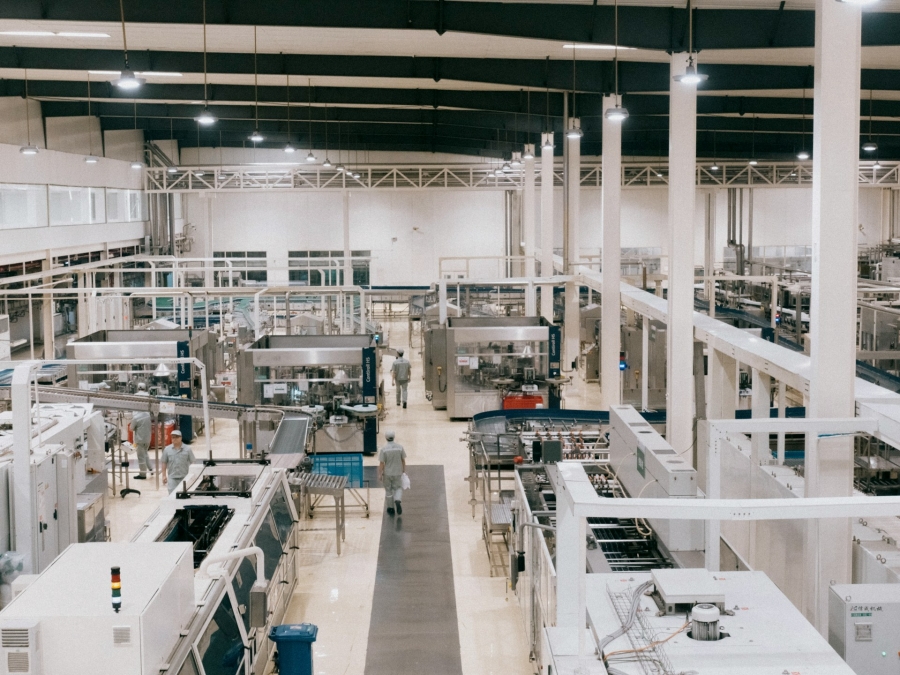
Used vs. New Manufacturing Equipment That Actually Pays Off
Why ROI Matters More Than “New vs. Used”
The core question is not simply “Should we buy new or used?” It is “Which option will generate the strongest financial return, fastest and most reliably?” For manufacturers and machine shops, every piece of equipment is a capital asset that should create more value than it consumes, within a reasonable time frame and with acceptable risk.
When we talk about return on investment (ROI), we are talking about the total financial performance over the entire service life of the asset, not just the initial purchase price. A well-maintained pre-owned press brake, lathe, or compressor can shorten the payback period, preserve working capital, and still deliver many years of productive uptime. For many small and mid-sized operations, acquiring pre-owned equipment is what makes expansion possible without overextending cash reserves or credit lines.
There are situations, however, where brand-new machinery is the better fit, particularly when you need cutting-edge controls, integrated automation, or when the application is so critical that OEM warranty coverage and factory support carry more weight than upfront savings. The key is to compare hard numbers, not impressions. In this article, we outline how to evaluate ROI, break down the full cost structure, and highlight scenarios where late-model pre-owned equipment from a dealer such as Allset Machinery can outperform new machinery on a total-cost-and-return basis.
Breaking Down the Total Cost of Equipment Ownership
On paper, list price is the most visible number. In practice, it is only one component of the overall cost of ownership. When we help customers weigh alternatives, we look at the full economic picture:
- Purchase price or lease cost
- Freight, rigging, and handling
- Installation, integration, and setup
- Training, programming, and process development time
- Ongoing consumables and utility usage
- Preventive maintenance and corrective repairs
- Downtime exposure and lost production risk
- Residual value, resale, or trade-in potential
New equipment typically carries a higher acquisition cost but may include extended warranty coverage and direct OEM technical assistance. Pre-owned equipment usually requires a smaller initial outlay, easing financing pressure, and can still hold strong residual value if you choose proven makes and models. In many common categories, fabrication systems, metal-cutting machines, toolroom equipment, and general plant support gear, the pattern is similar: the more standardized the technology, the more likely a carefully selected pre-owned unit will deliver comparable output for substantially less total spend.
To make this tangible, it helps to calculate basic financial metrics such as the payback period and simple ROI:
- Payback period = Total initial investment / Net additional profit per month
- Simple ROI (%) = (Total net profit from the machine over its life / Total investment) × 100
For example, if an asset costs $80,000 fully installed, and generates $8,000 in additional monthly net profit, the payback period is 10 months. After that point, it is contributing incremental earnings. In the examples below, we keep this type of calculation in mind so you can adapt the approach to your own numbers.
Fabrication Operations: Increasing Throughput Without Adding a Shift
Consider a fabrication facility that is consistently constrained at the press brake. The objective is to eliminate this bottleneck without adding a second shift or turning away profitable work. The decision often comes down to a new CNC press brake versus a late-model, pre-owned unit sourced from a reputable dealer.
A typical comparison looks like this:
- Capital commitment: A pre-owned press brake usually requires a smaller down payment and lower financed balance. That preserves cash for material purchases, tooling, or strategic hiring.
- Lead time and commissioning: New systems may involve longer lead times. A pre-owned machine that is already in inventory can often be delivered, installed, and commissioned much sooner.
- Ramp-up to production: A clean, late-model brake with a familiar control platform can often be producing acceptable parts quickly, with minimal training, especially when operators already know the interface.
Viewed through an ROI lens, adding this forming capacity can enable the shop to:
- Accept additional work each month
- Reduce overtime or avoid standing up a second shift
- Shorten lead times and improve on-time delivery for key accounts
If the pre-owned brake carries a lower monthly payment, the new capacity does not need to generate as much incremental profit to cover its own cost. That typically produces a shorter payback period, often measured in months, while limiting financial exposure. In situations like this, opting for a pre-owned brake trades some warranty coverage and cosmetic “newness” for faster capital recovery and a more conservative risk profile.
Machine Shops: Entering Higher-Value Work Segments
Now consider a CNC job shop looking to add 5-axis capability or another turning center. The goal is not just extra capacity; it is the ability to quote higher-margin parts and pursue more complex programs. Here the choice is a factory-new 5-axis machining center versus a well-maintained, previously owned machine.
New equipment offers the latest controls and options, but it also commits you to higher monthly obligations. A strong pre-owned 5-axis machine from a reliable provider can get you into that capability tier sooner and with a significantly smaller capital outlay. That can be decisive if you are actively quoting work and need to demonstrate that the necessary equipment is in place or on the way.
Accuracy and reliability are valid concerns. To address them, we recommend:
- Checking backlash, spindle condition, and axis movement
- Reviewing documented service and maintenance history
- Running test cuts and verifying actual part tolerances
- Confirming control versions, software support, and available service resources
On the financial side, consider:
- Additional billable spindle hours per month that the new capability makes possible
- Your effective shop rate on that 5-axis or turning resource
- Net profit per billable hour after labor, material, and overhead allocation
If a pre-owned machine delivers nearly the same throughput and precision as a new one, but with materially lower ownership costs, your break-even point arrives sooner. That compresses the timeline between installation and true profitability and frees up cash sooner for tooling packages, CAM software, automation, or the next piece of equipment.
Plant Support Equipment: Eliminating Hidden Constraints
Not every asset is a primary revenue generator. Often, strong returns come from support equipment that keeps your core machines productive. This includes air compressors, saws, material-handling systems, and toolroom equipment that quietly dictate how efficiently your main production resources can run.
For this category, brand-new equipment can be more than you need, especially when:
- The equipment does not operate at full capacity continuously
- Performance requirements are straightforward and well understood
- The main objective is to remove minor delays and unplanned downtime
Acquiring pre-owned support equipment often means:
- Lower capital investment in non-core assets
- Greater flexibility to rearrange, scale, or resell as layouts and processes evolve
- Faster internal approval cycles, since the spending level is lower and easier to justify
From an ROI perspective, a used forklift, saw, or compressor that shortens setup times or eliminates waiting on material can unlock additional productive hours on your high-value machines. If your machining centers or presses can now run more hours per week because support functions are no longer the constraint, the payback on those auxiliary assets comes from the extra revenue and reduced idle time, not just from the direct savings on the purchase itself.
Managing Risk When Purchasing Pre-Owned Equipment
Buying used does not have to introduce uncertainty. The goal is to approach the acquisition like an engineering project, guided by objective checks and data rather than assumptions. When customers explore pre-owned options with us, we suggest a straightforward risk-management checklist:
- Inspect the equipment in person or through detailed photos and video
- Review maintenance logs and service records when available
- Request a test run or sample cuts where practical
- Verify operating hours, wear components, and control functionality
- Confirm the availability of spare parts, documentation, and technical support
Working with a specialized pre-owned equipment dealer can streamline this process. At Allset Machinery, our focus is on sourcing and supplying pre-owned manufacturing and metalworking assets. We regularly refresh our inventory across fabrication systems, metal-cutting machinery, toolroom equipment, and plant-support categories, and we aim to provide clear, detailed descriptions so buyers understand what they are acquiring.
Matching the right pre-owned machine to your specific application is equally important. Factors we review include:
- Age versus technology level: Does the control platform and hardware integrate smoothly with your current programming, networking, and inspection methods?
- Brand and model track record: Are consumables, spares, and service expertise reasonably accessible?
- Long-term flexibility: If you later outgrow this asset, is there a healthy secondary market that supports resale or trade-in?
By addressing these questions early, you can capture the financial advantages of pre-owned equipment while keeping technical, operational, and reliability risks under control.
Translating ROI Analysis Into Your Next Equipment Decision
The most effective equipment strategies are based on total economic performance and payback, rather than an abstract debate about “new vs. used.” For many manufacturers and CNC shops, pre-owned assets accelerate access to new capabilities, protect cash flow, and reach break even sooner, especially in widely used categories such as fabrication equipment, metal-cutting machines, toolroom resources, and general plant-support systems.
The practical next step is to apply the simple financial formulas discussed earlier to your own situation. Estimate the incremental revenue and net profit each candidate machine could generate, compare those figures with the fully burdened acquisition and installation cost, and calculate how long it takes each option to pay for itself. When you review the results side by side, it often becomes clear where a new machine is justified and where a carefully selected pre-owned asset offers a stronger, more flexible return on invested capital while diversifying your equipment strategy.
Unlock Reliable Equipment Value For Your Next Move
If you are planning to upgrade your production line, we can help you recover maximum value from your surplus assets and make it easier for qualified buyers to buy used machinery. At Allset Machinery, we streamline every step so you spend less time managing equipment and more time focusing on your core business. Share a quick list of the machines you are ready to move, and our team will respond with straightforward options. Ready to talk details or schedule a review of your equipment portfolio? Simply contact us today.
